Austria - Perjentunnel - Highway More Information …
The Tauernmoos pumped storage power plant in the Stubach Valley (Salzburg) is being built to provide sustainably generated electricity from renewable sources for railway operations.
The pumped storage power plant connects the two reservoirs Weißsee and Tauernmoossee with a height difference of approx. 220 m. The system functions like a large-scale battery: during periods of low electricity demand, water is pumped into the higher reservoir and, when demand increases, it is released and used to generate electricity via turbines. In this way, large amounts of energy can be stored efficiently and accessed flexibly. Commissioning is currently planned for 2028.
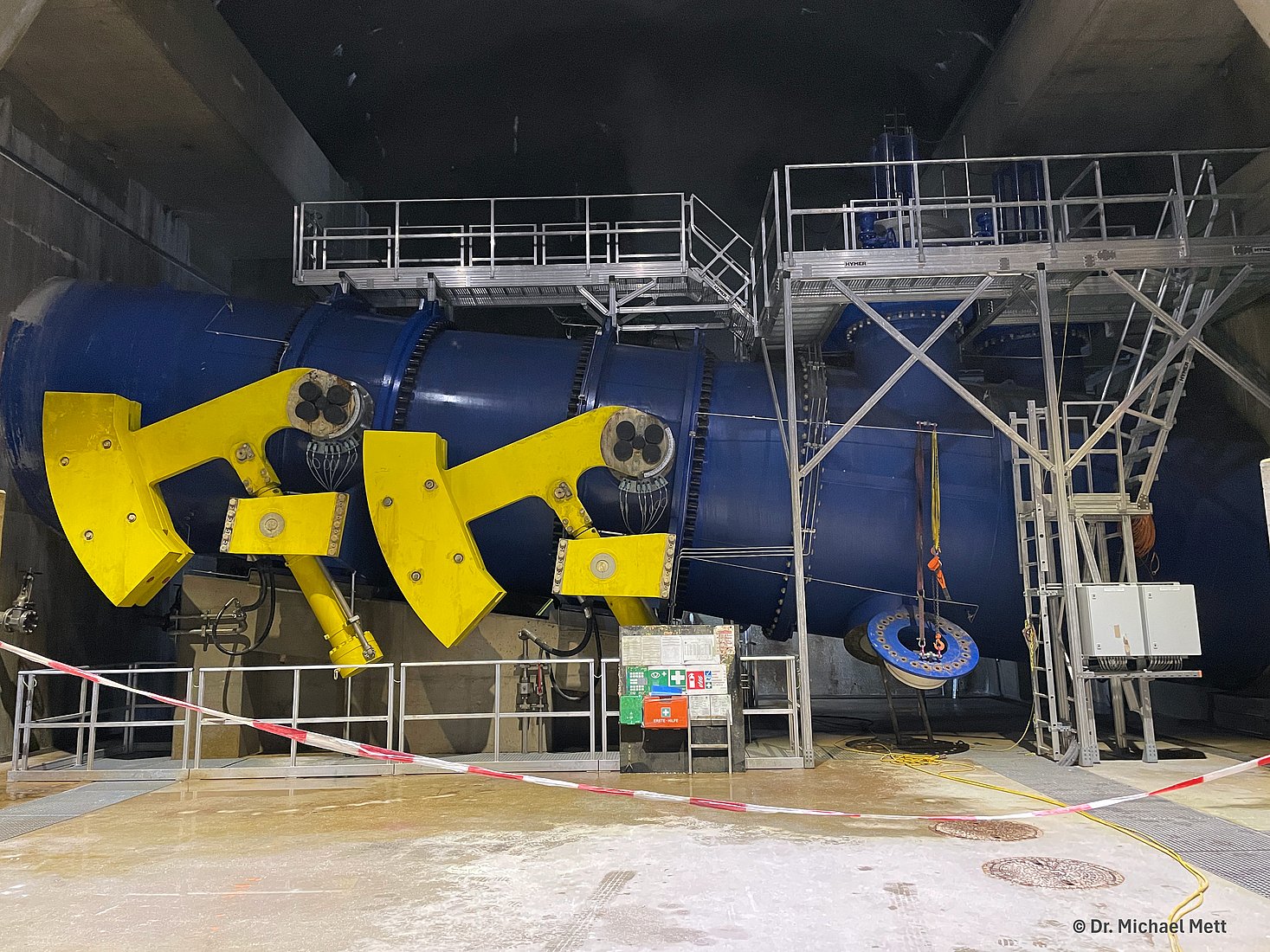
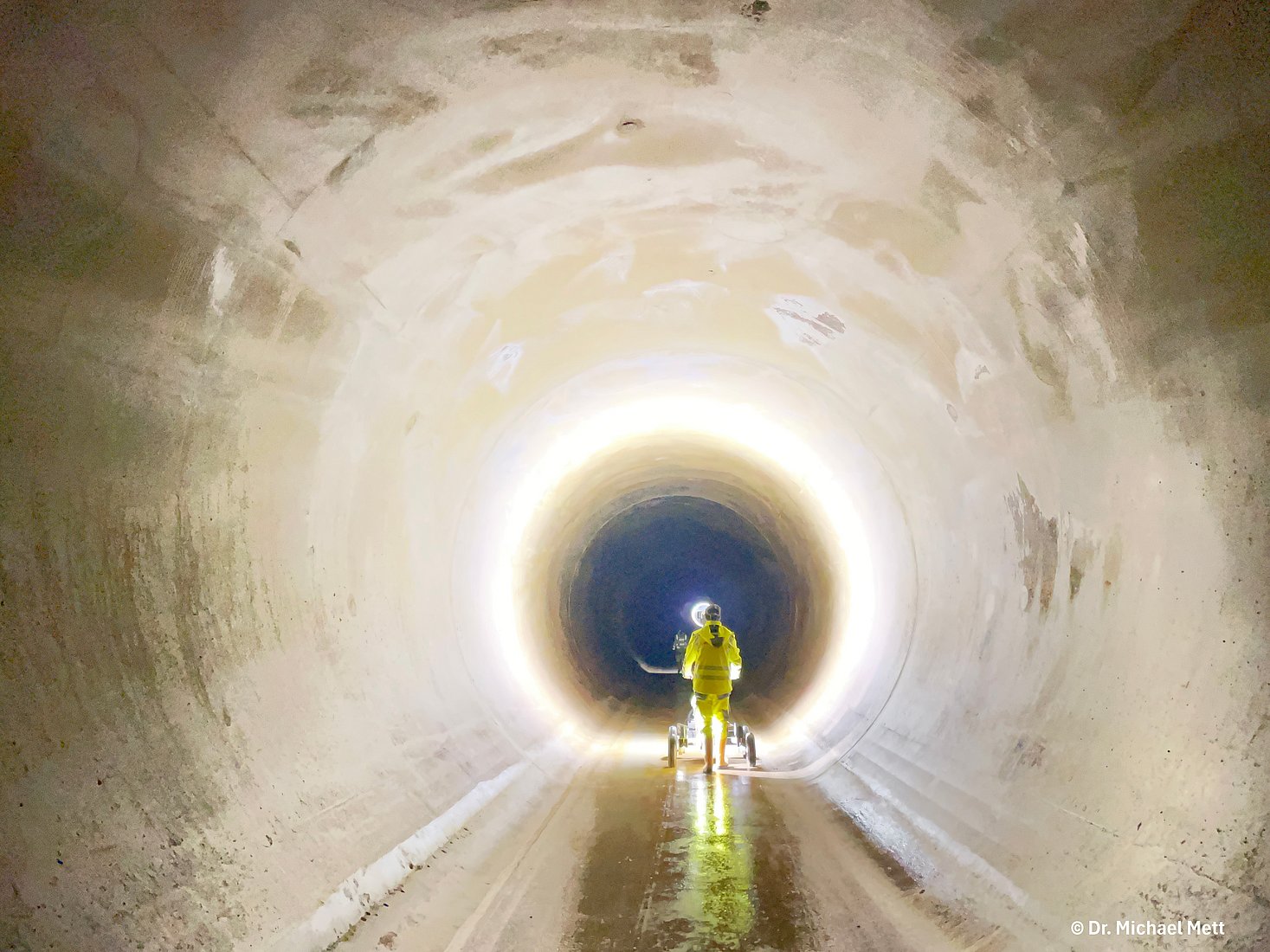
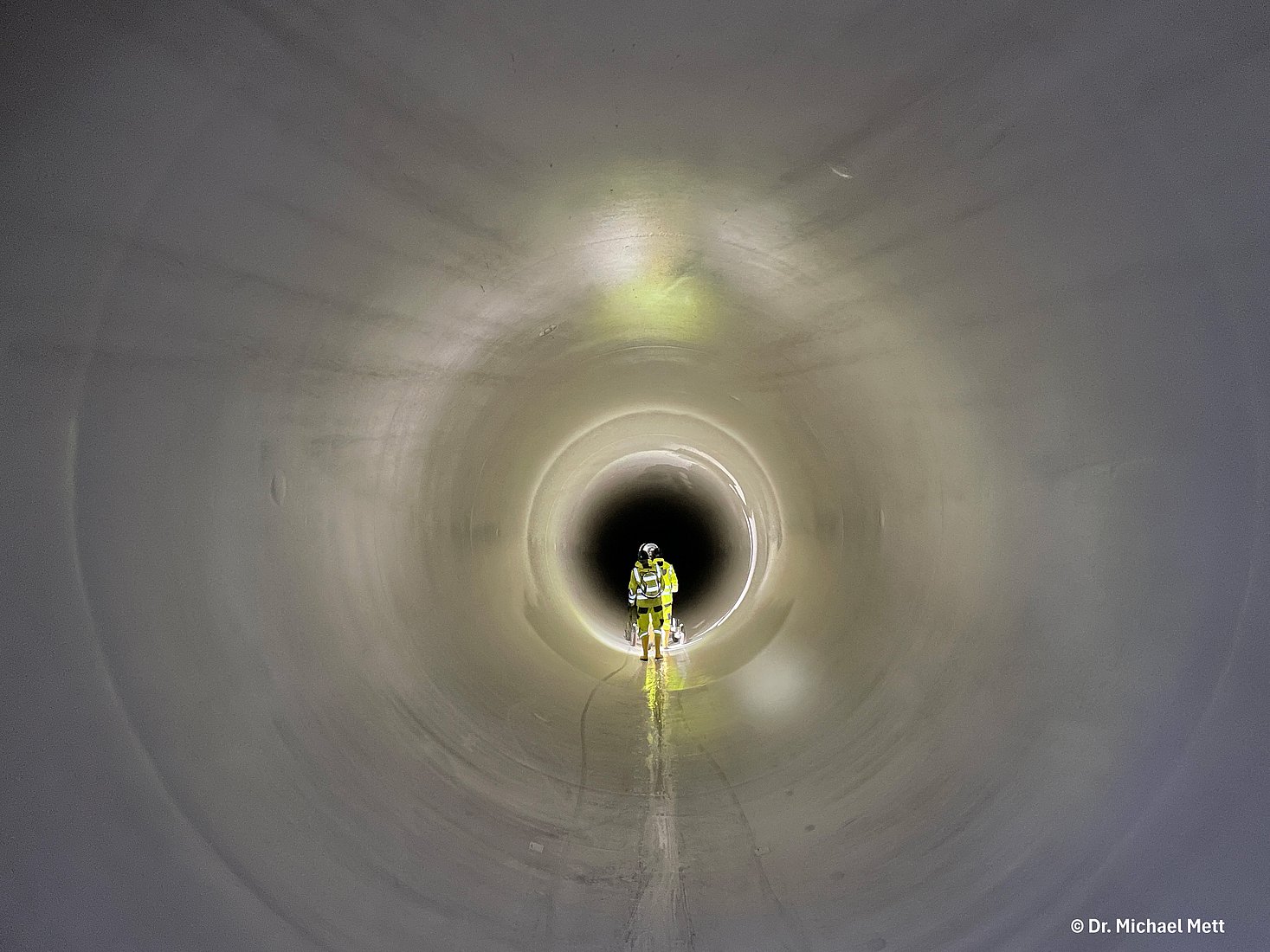
The company Dibit was commissioned to scan the power descent (pressure tunnel with prestressed concrete inner shell) between the Weißsee and Tauernmoossee. The approximately 1.6-kilometer section between the shut-off valve at the Weißsee and the cavern power plant has a diameter of 5.2 m.
The aim of the measurement was to comprehensively document the concrete surface of the pressure tunnel in the form of a high-resolution 3D model and detailed orthophotos. Particular attention was paid to the detection and analysis of possible defects such as cracks, spalling, or other surface changes.
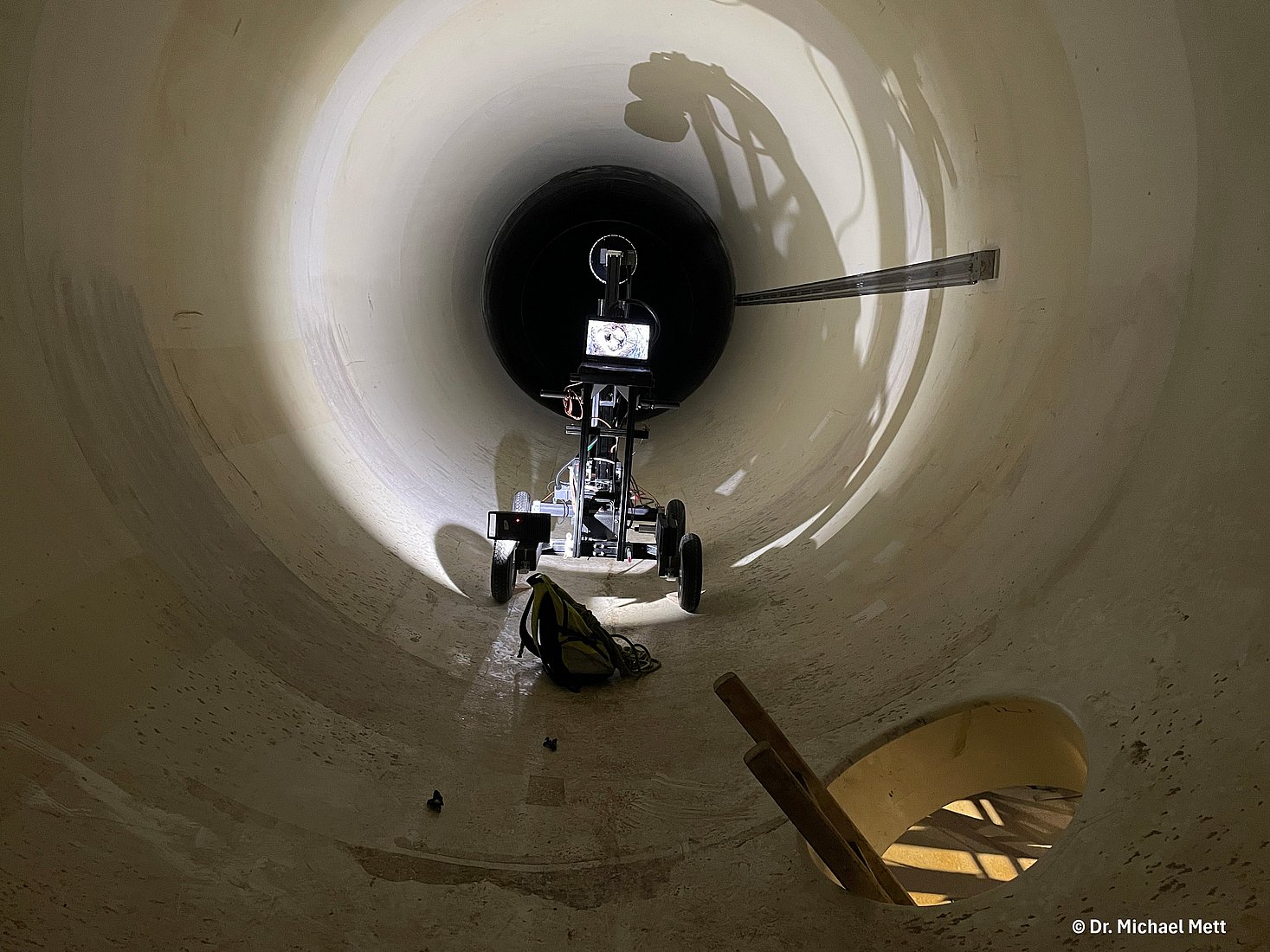
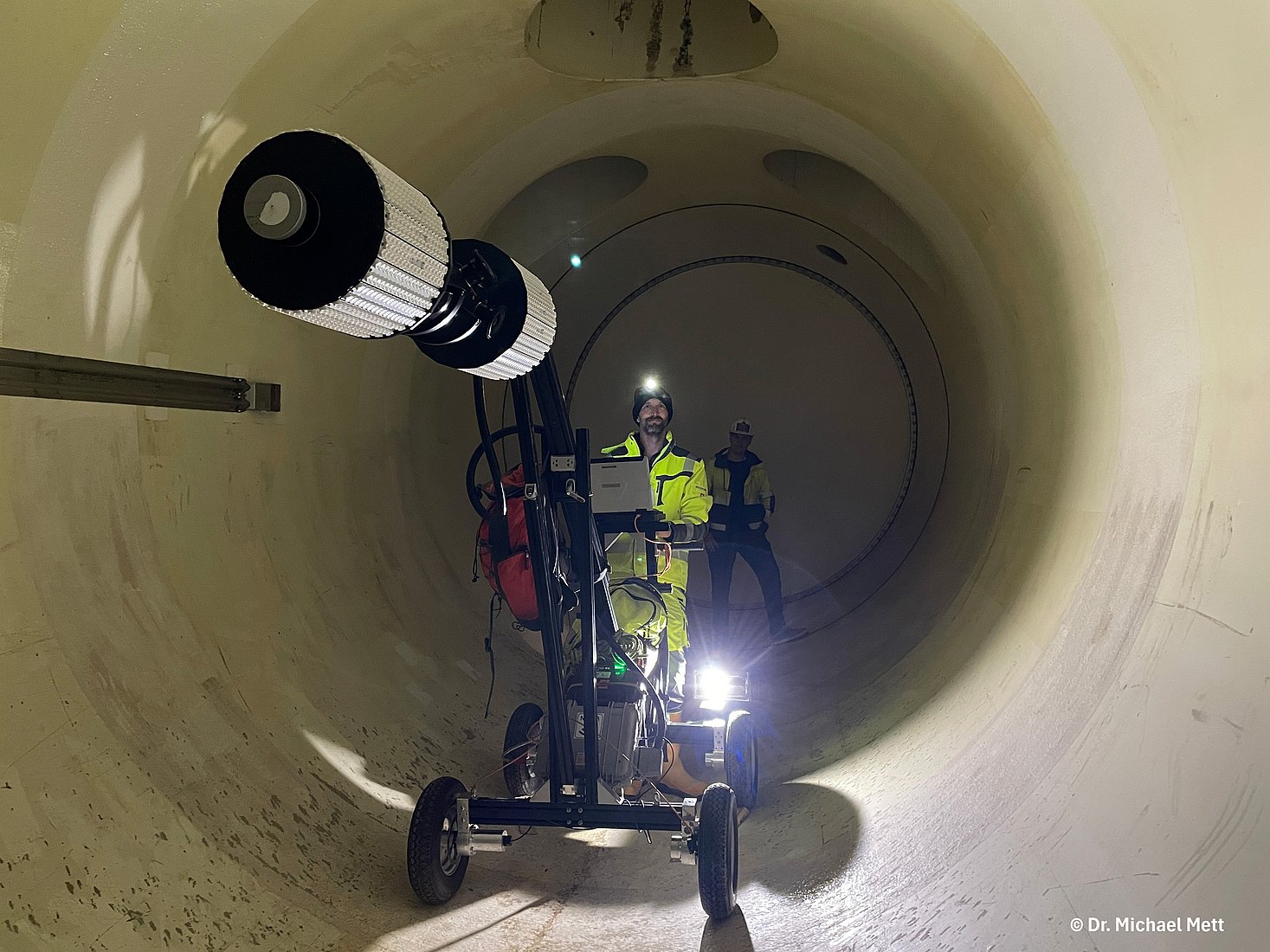
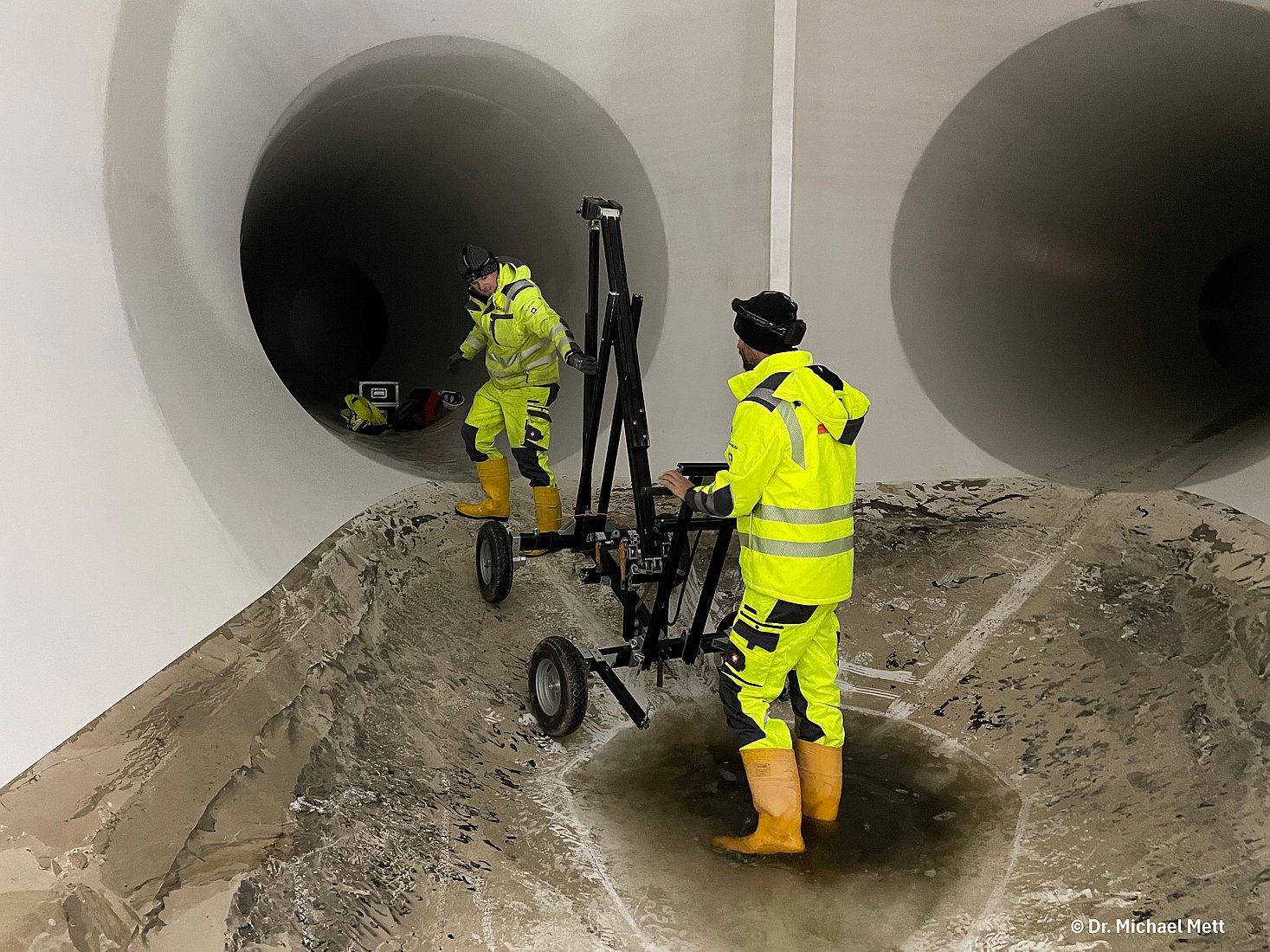
The Dibit “Altira” measuring system was used, which is equipped with 360-degree panoramic cameras and completely covers the entire tunnel surface.Images are captured at regular intervals in the direction of travel and actively illuminated by an integrated flash system due to the absolute darkness in the tunnel.
Photogrammetric processing is used to calculate a 3D model with a photo texture resolution of 1×1 mm per pixel. This allows even cracks ≥ 0.3 mm to be detected and analyzed.
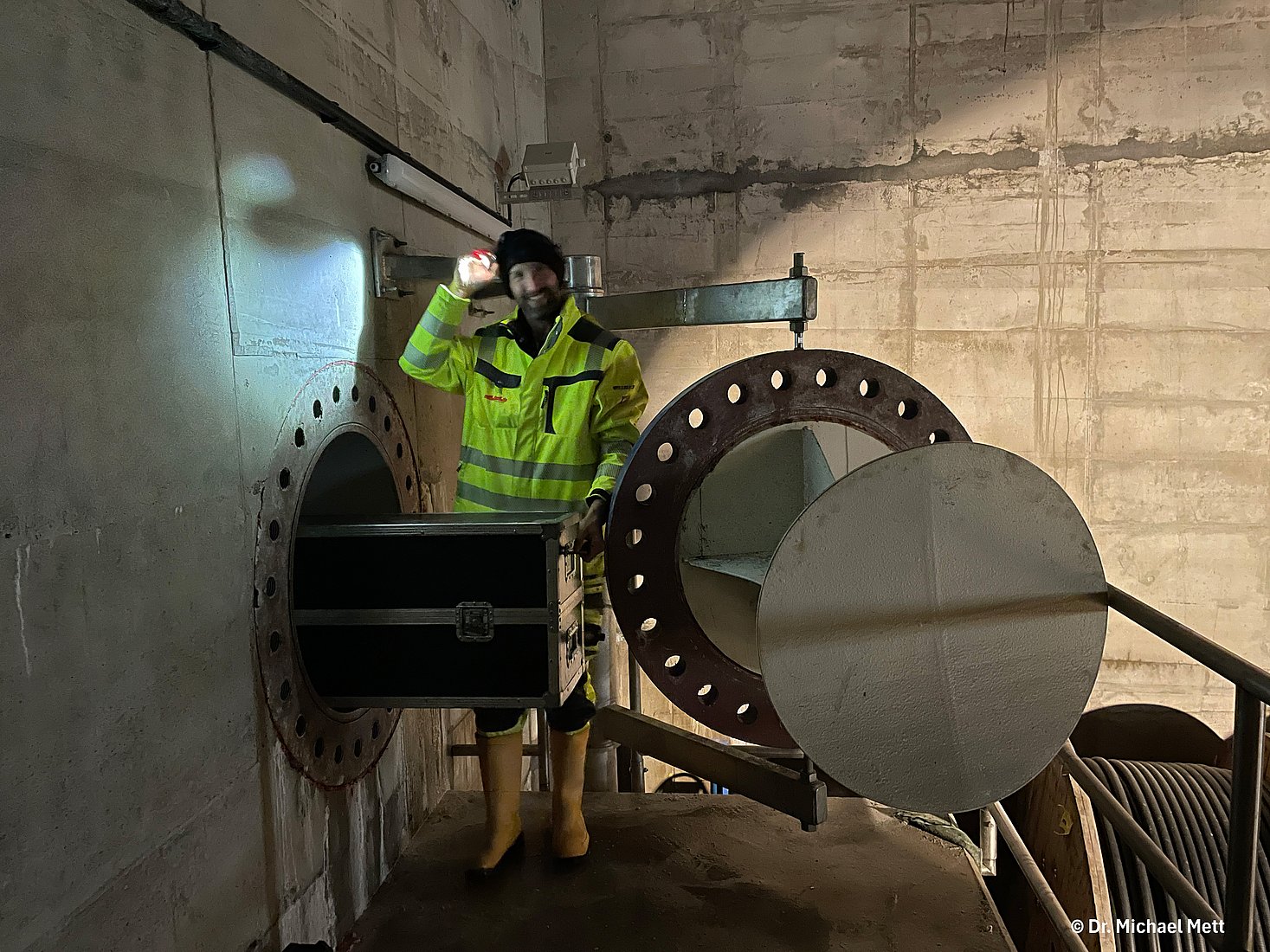
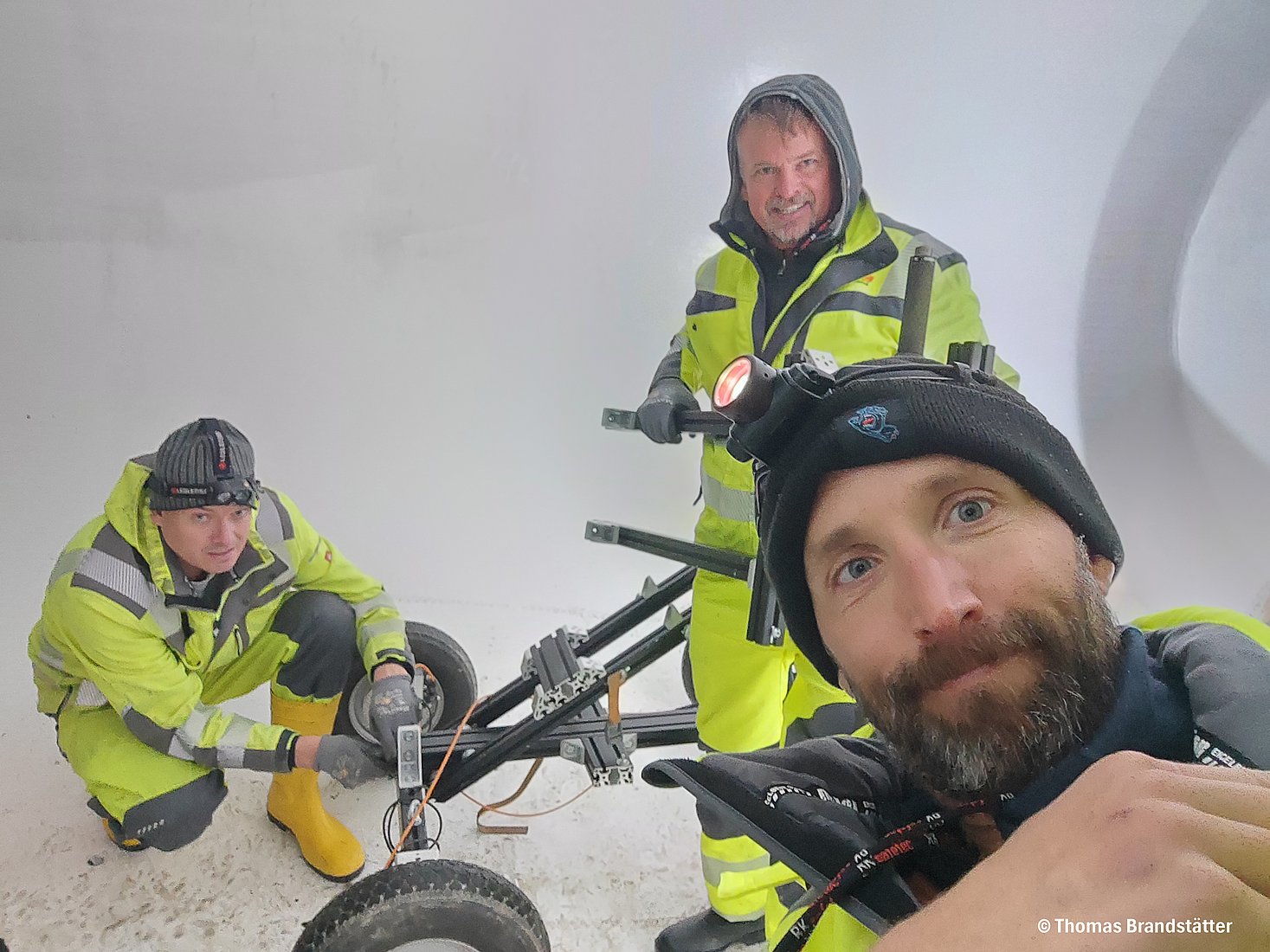
The measurement was carried out in mid-November 2025, starting downstream at the shut-off valve at Weißsee. To do this, the Altira had to be dismantled into individual components, inserted into the pressure tunnel via a manhole, and assembled, tested, and calibrated on site. Due to the steep gradient of approx. 15%, the braking system in particular posed increased technical and safety-related challenges. After the measurement was completed, the system was dismantled again at the lower end of the tunnel and removed via the manhole.
The scan provides ÖBB with valuable information about the condition of the pressure tunnel even before the pumped storage power plant goes into operation. In addition, the data serves as a long-term reference: in the coming decades, comparative measurements can be carried out to precisely detect, quantify, and evaluate changes in the concrete surface at an early stage.